










As the Western Interconnection prepares for SPP Markets+, the ability to integrate transmission operations directly with market dispatch is becoming a foundational requirement for Balancing authorities (BAs) and Transmission Service Providers (TSPs).
Unlike traditional bilateral scheduling, Markets+ co-optimizes energy and flexibility reserves across a multi-state footprint requiring transmission availability, scheduling, and congestion management to be aligned with the market in real time. BAs and TSPs must actively coordinate:
- Available transfer capability
- Opt-in vs. opt-out transmission
- Interchange scheduling limits
- Congestion rent eligibility
- Real-time constraint enforcement
This integrated framework ensures:
- Reliability under constrained transmission conditions
- Transparency in congestion rent allocation
- Lowest-cost dispatch across participating balancing authority areas (BAAs)
This blog offers a high-level overview of how Markets+ accomplishes this through five core mechanisms:
- Market Transfer Interfaces (MTI)
- Market Opt-In Transfer Interfaces (MOTI)
- Congestion Rent Eligible Transmission Service Reservations (CRETSRs)
- Service Flow Constraints (SFCs)
- Coordinated Interchange Scheduling Limits (CISLs)
Whether you are a BA operator, TSP, or market participant, the sections below explain how these mechanisms work together to preserve reliability while enabling economically efficient dispatch across the Markets+ footprint.
If you’d like a deeper dive into these foundational mechanisms, download the full Markets+ whitepaper below.
Market Transfer Interfaces (MTI): optimized BA-to-BA transfers
Before Markets+ can optimize energy flows, it needs a clear structure for how energy transfers move between Balancing Authorities. That’s where MTIs come in.
MTIs are predefined scheduling paths between two participating BAAs. They allow Markets+ to automatically schedule interchange, align e-Tags with market awards, and determine the optimal energy flow across BA boundaries.
MTIs give Markets+ the “map” it needs to move energy efficiently and reliably while honoring registered scheduling points, priorities, and directional limits.
Market Opt-In Transfer Interface (MOTI): using non-Markets+ transmission
Some market transfers rely on transmission systems outside the Markets+ footprint; this is where MOTIs come in. MOTI allows BAAs to use opted-in firm transmission from non-Markets+ TSPs.
MOTIs are essential for:
- Expanding the Markets+ footprint
- Leveraging existing firm transmission
- Supporting market transfers across multiple TSPs
MOTIs help Markets+ grow flexibly without requiring every TSP to fully participate from day one.
Learn more about how PCI supports participation in SPP Markets+ on our dedicated Markets+ page.
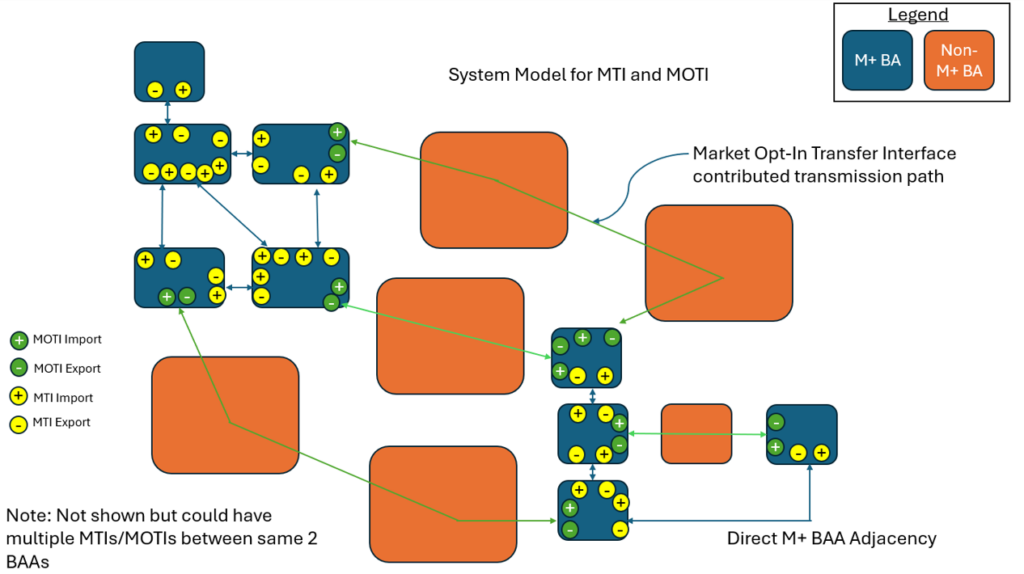
Figure 1. MTI and MOTI Setup. Source: SPP M+ Market Transfer Concept Education
Congestion Rent Eligible Transmission Service Reservations (CRETSRs): ensuring fair congestion allocation
Once transmission is available, the system must also fairly determine who earns congestion rents. CRETSRs serve that purpose.
They identify firm transmission reservations that qualify for congestion rent allocation. The Markets+ operator validates these rights using OASIS data beginning 15 days before each operating month.
CRETSRs ensure transparency, auditability, and fairness in how congestion revenues are assigned across the footprint.
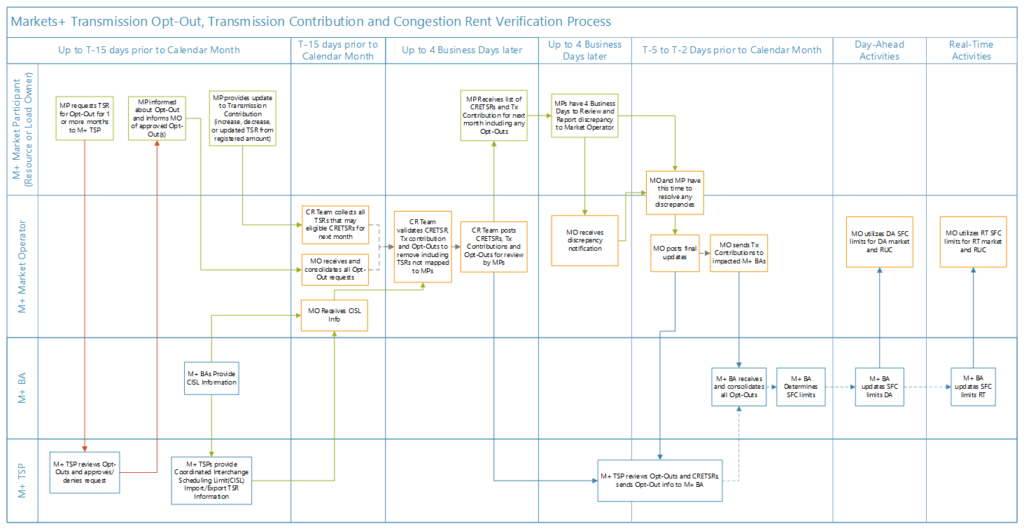
Figure 2. CRETSR Verification Process timeline. Source: Exhibit 6-1 Markets+ Protocols Production
Service Flow Constraints (SFCs): enforcing transmission capability
Even with interfaces and reservations established, the market still must respect real-world transmission capability. SFCs make this happen.
Service Flow Constraints represent the effective transmission capability available to Market dispatch after accounting for opt-outs, opt-ins, and reliability set-asides.
They ensure that Market dispatch never exceeds physically available transmission across Day-Ahead, Reliability unit commitment (RUC), and Real-Time (updated every 5 minutes) runs.
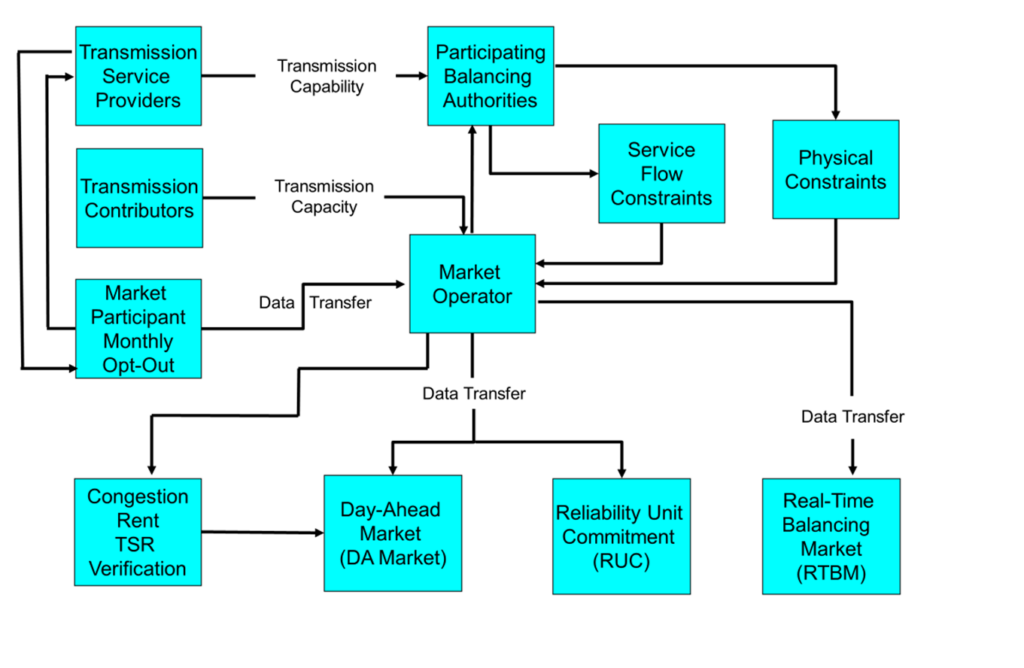
Figure 3. Transmission capability identification process. Source: Exhibit 8-1 Markets+ Protocols Production
Coordinated Interchange Scheduling Limits (CISLs): maintaining BA-to-BA interchange reliability
Finally, Markets+ needs a coordinated way to manage all these transfers in real time and CISLs help manage that.
CISLs establish the allowable interchange limits across MTIs, MOTIs, and BAA-level constraints. When limits cannot be met economically, violation relaxation limits (VRLs) determine which constraints relax first.
CISLs keep interchange reliable while still allowing economic optimization.
Compliance checklist for Markets+ participants
For Balancing Authorities (BAs):
- Register MTIs and MOTIs ≥ 45 days before operating month
- Submit BAA constraints, CISLs, and SFCs
- Provide real-time ICCP updates
- Ensure NAESB-compliant e-Tags
- Validate CRETSR congestion rent allocations
For Transmission Service Providers (TSPs):
- Communicate transmission capability and opt-in/opt-out status
- Support CRETSR OASIS verification
- Maintain VRL compliance for operational constraints
The bottom line: reliability, transparency, and market efficiency
SPP Markets+ succeeds only if transmission operations and market design move in lockstep.
Through MTIs, MOTIs, CRETSRs, SFCs, and CISLs, Markets+ delivers:
- Secure real-time operations
- Fair congestion rent allocation
- Economically efficient dispatch
- Scalable market expansion across the West
For BAs, TSPs, and market participants, mastering these mechanisms is foundational for successful participation in SPP Markets+.