








Most stories about joining a new electricity market skip the hardest part. They describe the decision, then jump to go-live, as if the months in between were just a matter of installation. Pick the market, sign the deal, flip the switch.
The switch is the easy part. The hard part is everything that has to be true before you can flip it, and most of it happens while both the old world and the new one are live at the same time.
Consider what a utility leaving one market for another actually has to do. It can’t turn the old market off, because settlement obligations linger for years after the exit. It has to build the new systems while the rules governing that new market are, in places, still being written. And it has to stay coordinated with its neighbors, who may each be moving toward different markets on different timelines, across the same shared transmission seams. None of that is installation. All of it happens in parallel, under load, with the lights on.
At PCI’s recent INFOCUS customer conference, Salt River Project walked the room through exactly this, not as a finished success story but as a dispatch from the middle of it.
The utility in the middle of it
Salt River Project (SRP) is a community-based, not-for-profit utility serving more than two million customers across the greater Phoenix area, with a generation fleet that spans just about every resource type there is: nuclear, coal, natural gas, wind, solar, hydro, geothermal, and biomass. Its projected summer 2026 peak is 8,869 MW. It is, by any measure, a large and complex enterprise to move from one market to another.
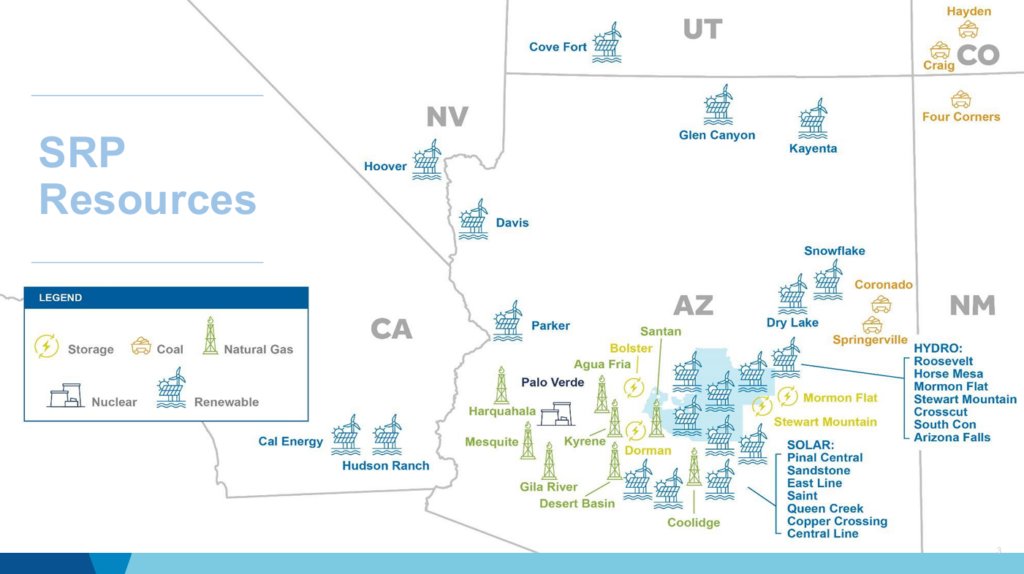
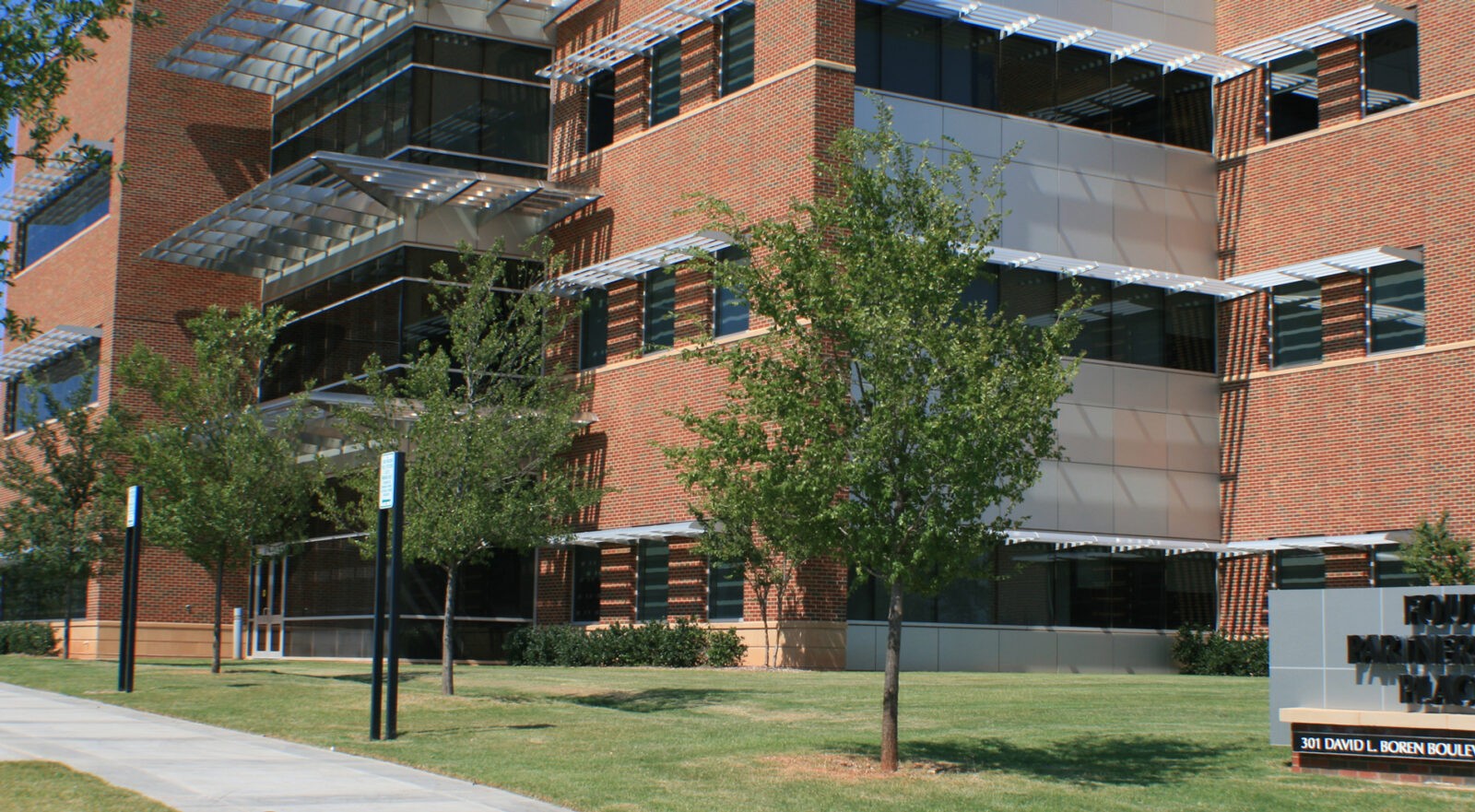
Credit: from Tyler Perry’s 2026 PCI INFOCUS presentation.
SRP joined the California ISO’s Western Energy Imbalance Market (WEIM) in April 2020, “right in the middle of COVID,” as Tyler Perry, SRP’s Senior Manager of Day-Ahead Market Implementation, reminded the audience. “Everyone worked from home. We made it happen.” Now SRP is preparing to leave the WEIM for a different market entirely: Southwest Power Pool’s Markets+, a non-RTO day-ahead and real-time market for the West, with a target go-live of October 1, 2027.
The decision itself came out of a full benefit study, the same disciplined starting point most utilities in the region are using. But the reasons went beyond the numbers. SRP was after three things Markets+ offered: optimization of its system and lower production costs, an independent and equitable governance structure, and support for resource adequacy through the Western Resource Adequacy Program. The governance piece, Perry said, was probably the biggest part of the decision.
That’s the decision. The rest of this is about the part that comes after the decision and before the switch.
You don’t get to turn the old market off
The first thing that makes a migration hard is the thing nobody expects: you leave a market, but the market doesn’t leave you.
“Just because we are getting out of the WEIM doesn’t mean we get to just shut off our WEIM instances of PCI,” Perry said. “We saw settlement obligations for up to three years. So we will have to set that aside, keep it going. In the meantime, we need to set up a whole new system.”
So for a stretch of time, SRP will be running two markets at once, operating in the WEIM while building and testing everything required for Markets+. SRP is targeting October 2026 for connectivity testing, then moving through market trials and into parallel operations the following summer, before finally pulling out of the WEIM in late 2027. The two worlds overlap by design.
“How do we operate two systems at the same time?” Perry asked. It’s the question the entire migration turns on.
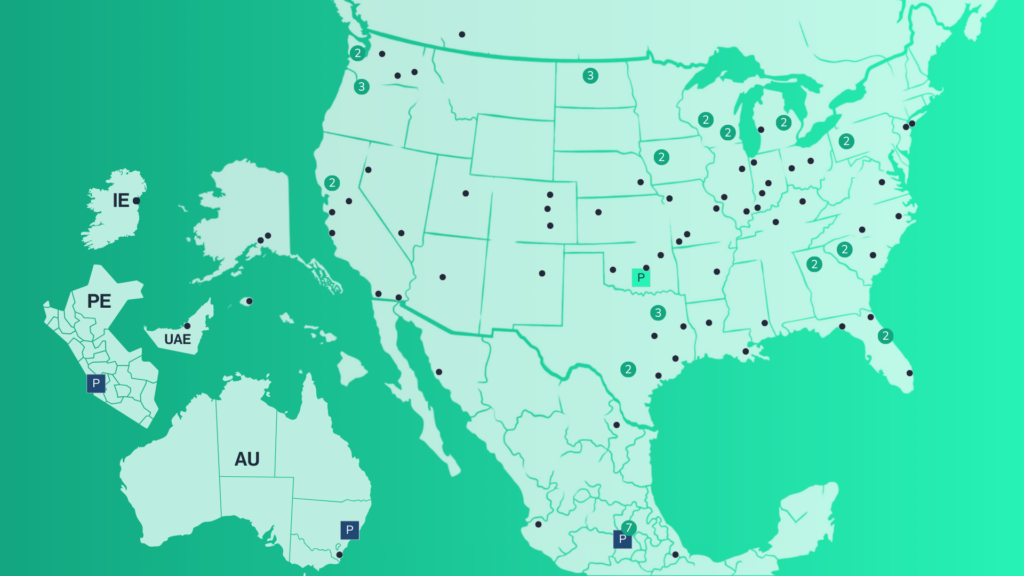
Credit: PCI Energy Solutions
Building to rules that aren’t finished
The second difficulty is subtler. When SRP joined the WEIM, it was joining a mature market with settled rules. Markets+ is newer, and its protocols are still being refined even as participants build toward them.
“It’s really hard as an implementation manager to implement and also be changing the protocols,” Perry said, “but we’re working through it.”
The team’s working approach captures the challenge in a single line: they are building the new system “to the protocols that we know of, and to protocols that we don’t know of yet.” That is not a contradiction so much as a design posture. It means favoring configurations that can absorb change, sequencing the work so that the parts most likely to shift are not the parts everything else depends on, and accepting that some decisions will have to be revisited as the market firms up.
Two systems today, three tomorrow
This is where SRP’s experience turns into a concrete lesson for anyone facing the same road.
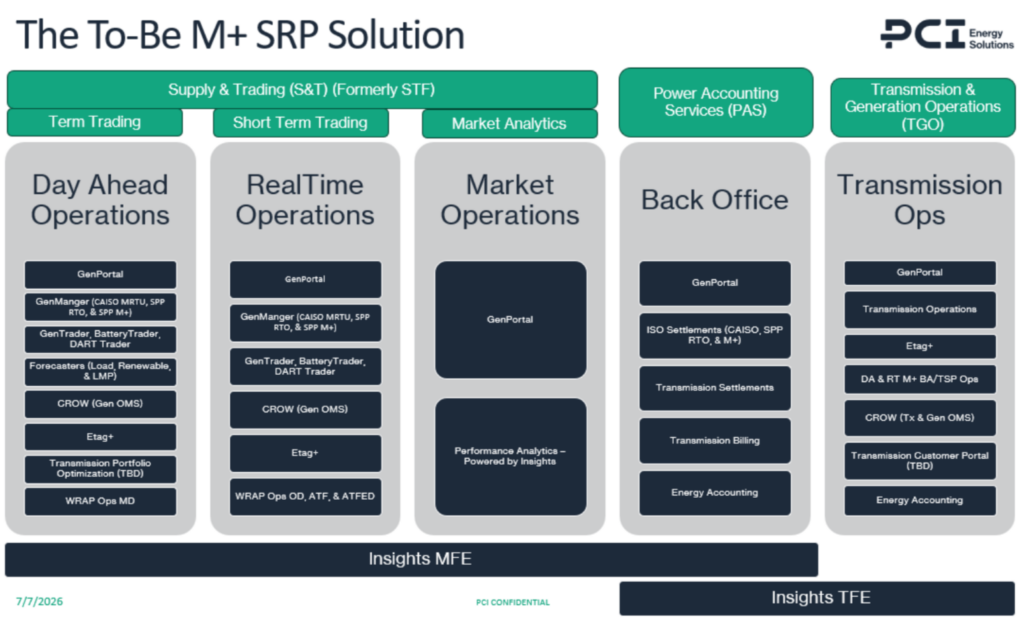
When SRP first moved into the WEIM, it built its PCI environment as two instances, one on the reliability side and one on the merchant side, with settlements drawing data from both. It worked, but it created a dependency. Because settlement pulled from both sides, a change in one instance could create a data burden that reached into the operations of the other.
“One of the lessons we learned is you should have three individual models,” Perry said.
So for Markets+, SRP is moving to three separate instances, one each for merchant, reliability, and settlements, each standing on its own. The goal is isolation: as Perry put it, “making sure that a change in one doesn’t affect a change in the other.” When settlements has its own instance, a settlements change stays in settlements. It doesn’t ripple into the reliability or merchant side.
That kind of isolation is exactly what PCI’s underlying platform, PCI Kube, is built to enable. Kube organizes functionality into loosely coupled modules, so that changes to one part of the system don’t disrupt the others. It’s the software-architecture version of the same principle SRP is applying at the instance level.
The reason this matters isn’t abstract, and it isn’t really about software. It’s about the people on the other end of each instance. At SRP, the systems map to distinct groups across the enterprise: the supply and trading floor, the transmission and generation operations floor, the shared power-accounting and settlements function where after-the-fact workflows live, and the IT group that supports the PCI platform. Isolation means one team’s change doesn’t disrupt another team’s day. Two systems today, three tomorrow, drawn along the lines of who actually does the work.
The settlements instance earns its independence for another reason, too. In the WEIM, SRP settles only a small share of its system through the market, “about five percent, ten percent,” Perry said. In Markets+, that jumps to the full system, one hundred percent. A function about to grow that much deserves to stand on its own.
The neighbors are migrating too
There’s a dimension to this that no single utility controls: everyone else is moving at the same time.
The desert Southwest is splintering across markets. In the same INFOCUS session, Public Service Company of New Mexico described its path toward the CAISO Extended Day-Ahead Market (EDAM), while SRP and several of its neighbors are heading to Markets+. These utilities share transmission seams, generation, and long-standing operating relationships, and now they’ll be doing it across a market boundary.
Perry’s take on this was refreshingly plain: “There will be seams issues, and there always have been seams issues. We just need to work together and solve them.” SRP has been doing exactly that, reaching out directly to neighboring utilities to start the coordination conversations early rather than waiting for the market operators to direct traffic. It echoes the theme PCI built the whole conference around, synergy, and it’s a reminder that a market migration is never a purely internal project. It’s a regional one.
The honest part
SRP is not done. Markets+ go-live is still more than a year and a half away, and much of the hardest work is happening right now: network and commercial modeling, mitigated offer methodologies for every generation type, extensive operator and trader training, tariff revisions, and getting executives comfortable with being loaded into a market for the first time.
That’s what makes the story useful. Most migration accounts are written after the fact, once the mess has been tidied into a clean narrative. This one is being told from inside the work, by a team that can still see all the moving parts. The lesson isn’t “here’s how it turned out.” It’s “here’s what the hard part actually looks like, while you’re in it”: the parallel operations, the moving protocols, the architecture built for isolation, the neighbors you have to bring along.
For any utility staring down its own market transition, that view from the middle may be worth more than a tidy ending.
Whether you’re weighing Markets+, EDAM, or another market move, PCI can help you plan the transition. Start the conversation at [email protected].